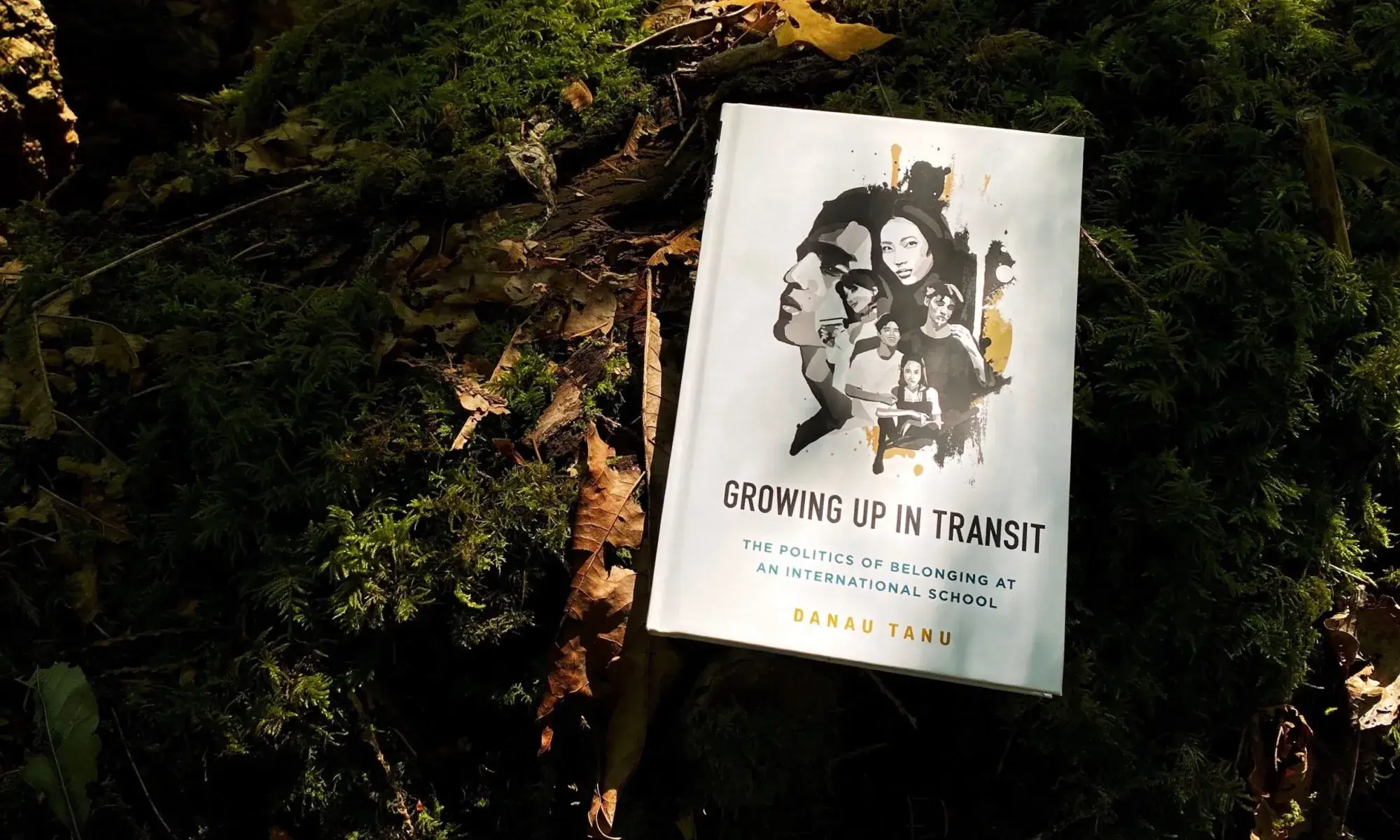
This is the e-handout for the Keynote for Day 3 of the CIS Inclusion via Diversity, Equity & Anti-Racism Foundation Workshop held on 17-19 March 2022.
It includes the resources mentioned in the presentation, slide deck, and additional resources.
Description
Racism affects all students. We are all complicit in it. But how? In this keynote, Dr. Danau Tanu challenges us to a paradigm shift that lays bare the way structural racism infiltrates the student experience even in areas that seem unrelated.
She shows how the ‘hidden curriculum’ can obscure the real, underlying issues in areas such as international transitions (including repatriation), classroom engagement, campus social life, academic learning, and so on.
Her keynote will help us see old problems in new ways and be better equipped to support students.
Aims
To challenge us to think of old ‘problems’ in new ways by:
rethinking the frameworks we use to analyse ‘problems’
ensuring fairness in the way use these frameworks or categories
understanding that it is okay to address ‘the ugly’ in our hearts
understanding that racism affects all students
The Hidden Curriculum.
Adapted from graphics designed by Mifune Takashi at irasutoya.com. Graphics copyright: Mifune Takashi.
Slide deck
The slide deck from the workshop is available in PDF format.
I want to share with you something personal and close to my heart.
The last few weeks have been difficult (for reasons I cannot disclose). As I searched for clarity and healing, I knew I needed to hear something real that could speak to my soul. So I scoured the internet for talks by William Paul Young (links below).
Night after night, I watched Young’s videos in tears as his God-inspired words broke through the current pain and laundered away past trauma.
But why Wm. Paul Young?
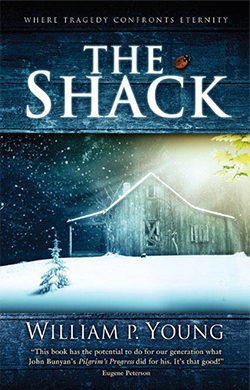
‘The Shack’ by Wm. Paul Young
Young is the author of The Shack – an accidental international bestseller that has sold over 22 million copies in more than 40 languages.
He wrote it as a Christmas gift for his six children and some friends to share with them his story of childhood abuse and healing through fiction. That Christmas, Young worked three jobs cleaning toilets and answering phones. He was broke and made 15 copies of the book using money a stranger had gifted him.
He had no intention to publish the book. But Young’s friends later urged him and The Shackdebuted at No. 1 on the New York Times trade paperback fiction best-seller list on June 8, 2008. It stayed there for 136 weeks (at No. 1 for 49 of those weeks). This happened after they had first self-published and sold a million copies out of a garage.
The Shack (2007) by Wm Paul Young
I originally read The Shack close to ten years ago. I gasped with delight when God the Father appeared as a Black woman called ‘Papa’ and the Holy Spirit as an Asian woman named ‘Sarayu’, which means ‘air’ or ‘wind’ in Sanskrit and is also the name of a river in India. And Jesus was … lo and behold … an actual Jew! (Duh.)
The multicultural, multi-gendered trinity appealed to the ‘Third Culture Kid‘ in me. Young was a white Canadian who had grown up overseas with the Dani tribe in Papua in Indonesia – and it showed.
But becoming a bestseller is not the real miracle. The real miracle is what the book and its backstory did for countless many – like they did this past Sunday night, and more, in me.
The beauty of relationship
Soon after reading The Shack, I found one of Young’s interviews online. I was struck by the beauty of the way he described our relationship with God in all its messiness and mysteries.
This past week, years later, as I struggled with the confusion of the present situation, I remembered that indelible beauty. So I googled, as you do, and found many more videos of Young’s talks and interviews that didn’t exist a decade ago.
Letting the stories and words I heard work through my own shack – my heart – has been painful. But also healing.
It would be a waste to keep them to myself. I hope they speak to you too.
You’ll find below:
The Shack Film version
Restoring the Shack Series of short videos on the backstories
The Talks Powerful testimonies of Wm. Paul Young’s backstory
The Sermons, etc. Deep revelations on how God comes into our shacks no matter how broken we are
The Shack – film version
Octavia Spencer is God the Father in The Shack. And her favourite refrain to Sam Worthington’s human Mackenzie, who is broken on the inside, is: ‘I am especially fond of you.’
The Shack (2017)
In case you don’t have time to read the book, you can watch the film version of The Shack for free on YouTube. You can also find it on Netflix. Check out the trailer below.
The Shack – Official trailer. Click here for the film
The Talks
This is my favourite category of Young’s videos – the talks. Many of the stories in these videos overlap but each one I watched contained new nuggets that spoke deeply to me. I’ve included several of them below.
Young’s story as a third culture kid & missionary kid
Of all the talks, this one best captures Young’s own story – the backstory of The Shack. If you’re not into Christian jargon, skip the first bit and start at 11:50 minutes.
He begins with his childhood in what used to be called ‘Irian Jaya’ on the island of New Guinea . He tells of childhood sexual abuse in his village and later at boarding school, and the long journey it took to heal from it.
Young’s powerful testimony in detail
In this video, Young goes into more detail about his adulthood – how he met his wife, his sibling relationships, and the depth of his childhood shame that led to religious addictions, manipulative coping mechanisms, an affair, near suicide, and the 11-year healing journey.
Young speaks of how we, humans, are ‘too incredibly crafted for simple solutions’. We need deep love and care to unwind the damage within.
Talks at Google: The Shack and its Aftermath
Young says that one of the greatest gifts the book gave him is ‘an invitation to walk on the holy ground of other people’s stories’.
In this talk for a more secular audience at Google, Young shares about the powerful impact that the book has had on the lives of some readers.
Lies We Believe About God: A conversation with Wm. Paul Young
Have you ever felt uncomfortable about the brimstone and fire image of God and how Christians often use this to scare people into a religion? What does the ‘wrath of God’ mean anyway? If you’ve ask these questions (I sure have), then you might like this interview.
Another interview
I also liked this interview though I cannot remember how the content differed from the other ones. Sorry!
By the way, for those of you who think Wm. Paul Young’s name sounds familiar, well, that’s because he’s on the cover of the Third Culture Kid book. Yup.
Wm. Paul Young’s endorsement on the cover of Third Culture Kids: Growing Up Among Worlds
The Sermons, etc.
God has Never Been Separated From Us with Baxter Kruger
(Updated 14 May 2022)
As I watched Wm. Paul Young’s videos, I was introduced to others who also believe that God has never been separated from us. God is and has always been in our shacks no matter how broken we are. Baxter Kruger’s explanation was mind blowing.
A sermon on Genesis
This one is an actual sermon rather than a testimony of Young’s personal story. I include it here because I was fascinated by the way he talks of God as masculine and feminine.
More than that, I was struck by the way Young speaks to that part of us that find it difficult to trust the character of God.
Encountering the God of Unending Love with William Paul Young
(Updated 5 May 2022)
Church is a struggle for me. Having been to churches in different countries with different languages and culture, I’ve concluded that they are 99.9999% human religion and culture, and 0.0001% God. But still I go (occasionally) – for that 0.0001%.
When I do go, I tend to drift around on the margins of its culture where it feels safer and more comfortable. As a result, I’m often seen as ‘backslidden’ by others even though I don’t believe that I am. But still I go – for the community.
Don’t get me wrong. There are also things that churches do that I benefit from. But for the first time, in this podcast episode, I heard someone explain, without mincing his words, what it is that felt ‘off’ all these years.
‘Only be Christian when it’s helpful,’ says Young, because there are many other ways to talk about our connection with God. Our relationship with God is not a religious system.
Besides, Jesus wasn’t a ‘Christian’ was he?
In fact, Young goes on to urge: ‘Let’s not tie our identity with a system—not to a nation, not to a culture, not to our colour—because those things are not our identities.’
Damn right.
Restoring The Shack with Wm. Paul Young – A series
Update: This video series is no longer available on YouTube.
In this series of short videos, Young focuses on different topics found in The Shack. He reads selections from the book and includes many stories of miraculous coincidences and insights that came after the book was published. He also tells us of stories from his readers about how the book came into the midst of their own ‘great sadness’.
The series has 20 episodes that are easy to digest, starting with Episode 1. But if you want to watch something more hard hitting, scroll down.
Trailer for Restoring the Shack. (Or see here for Episode 1.)
I have not finished watching Wm. Paul Young’s videos. So I may add more here when I find more that speak to me. Thanks for reading and being interested. Feel free to come back to this page later or share it with your friends.
How does mobility and structural racism intersect in international schools and affect students?
This is the e-handout for the online presentation for the SPAN Symposium held on 5-6 March 2022. It includes a list of resources mentioned in the presentation and additional resources.
The Hidden Curriculum.
Adapted from graphics designed by Mifune Takashi at irasutoya.com. Graphics copyright: Mifune Takashi.
Core topics
How does the hidden curriculum of structural racism show up in international schools?
What happens when a child’s identity mirrors are distorted?
What does internalized racism look like for international school students?
How do the hidden narratives told by school staff impact students?
How does transition issues related to mobility intersect with issues of structural racism?
TCKs of Asia live forums & Third Culture Stories podcast. Highly recommended for those who want to better understand the experiences of Asian third culture kids. Topics covered:
This is the e-handout for the online Parent Session (English) in Singapore. It includes a list of resources mentioned in the presentation, the slide deck and additional resources.
The Hidden Curriculum.
Adapted from graphics designed by Mifune Takashi at irasutoya.com. Graphics copyright: Mifune Takashi.
Core topics
Hidden curriculum
Identity development (mirror concept)
Cultural gaps with family
Internalised racism
Themes
Being ‘seen’
The power of listening
Slide deck
The slide deck from the workshop is available in PDF format below.
BREAKOUT #1: Cultural gaps & family relations (8min)
Q. Do you experience any challenging cultural gaps between you & your child/children? Please describe it. How has it affected your relationship with them?
BREAKOUT #2: Self-reflection: Being ‘seen’ (8min)
Q1. Describe a time when you felt seen by a teacher (or any adult). Why did you feel seen?
Q2. Describe a time when you did not feel seen by a teacher (or any adult). Why did you not feel seen?
INSTRUCTIONS
Work in pairs. 8 minutes total.
Step 1: Speaker shares story (3 min)
Step 2: The Listener retell the Speaker’s story using ‘Active Listening’ skills (1 min)
Step 3: Swap roles. Repeat steps 1 & 2
ACTIVE LISTENING
Be neutral. Do not judge. Be attentive (nod, etc), patient and don’t fill the silences.
Reflect back to the speaker what they said. Use their words as much as possible. Do not interpret. Do not add your opinion.
This is the e-handout for the online workshop for Learning for Leaders. It includes a list of resources mentioned in the presentation, the slide deck and additional resources.
The Hidden Curriculum. Adapted from graphics designed by Mifune Takashi at irasutoya.com. Graphics copyright: Mifune Takashi.
Core topics
Hidden curriculum
Internalised racism & identity
Identifying cultural gaps & privilege
Role of educators
Themes
Finding common ground
Being ‘seen’
The simple things
Slide deck
The slide deck from the workshop is available in PDF format below.
The Global Imaginary of International School Communities by Dr. Heather Meyer (2021). A detailed account of how the concept of internationalism is used to exclude local students. (Based on ethnographic research at an international school in Germany.)