It’s a Two-Way Street – Keynote


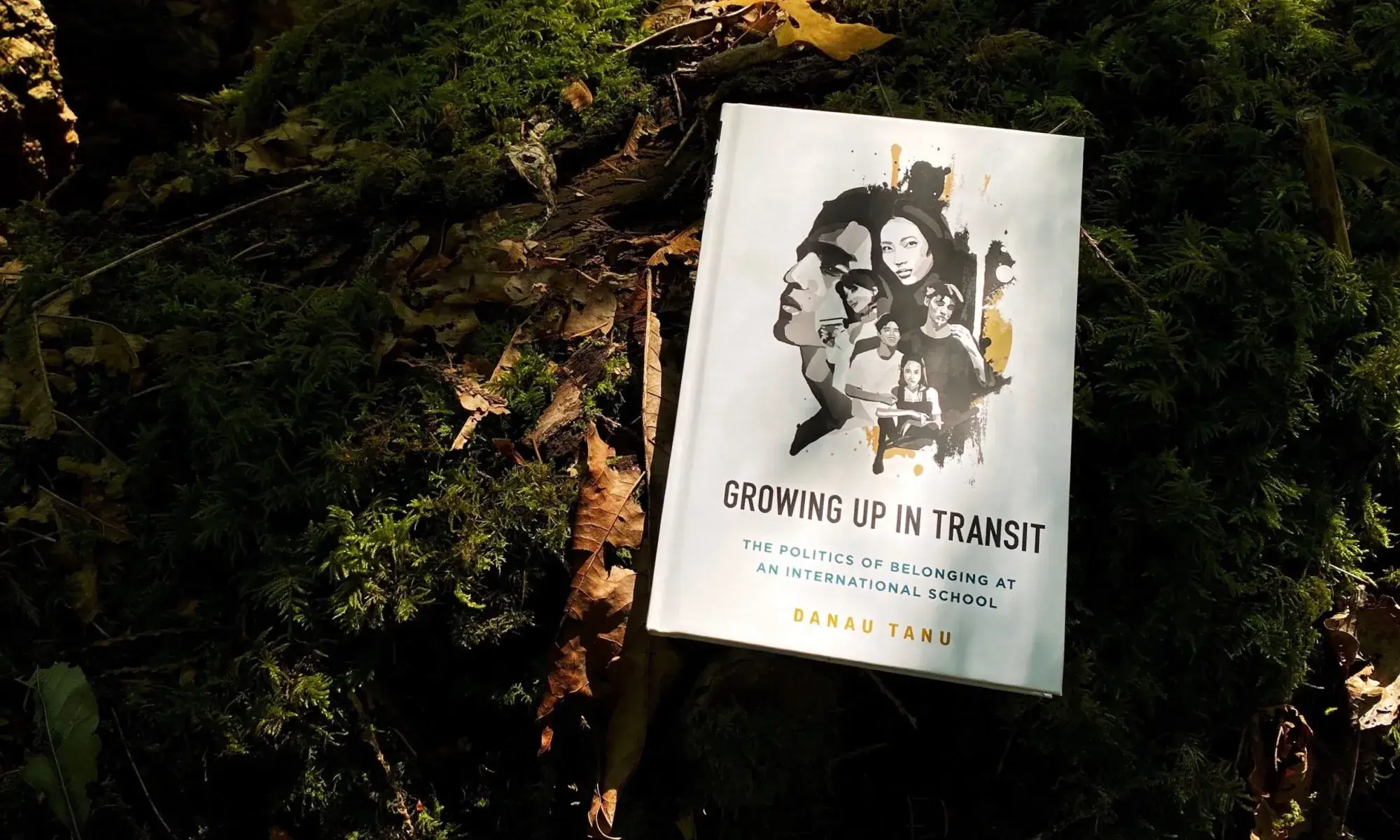
Photo by Marissa&Eric on Unsplash
Main themes
  • Two-way street
  • Being ‘seen’
CORE TOPICS
  • the hidden curriculum (and hidden narratives)
  • being ‘international’ and invisible diversity
  • teachers as gatekeepers / not role modelling
  • internalised racism
SLIDe deck

The slide deck from the keynote talk are available in PDF format.

Resources mentioned in the keynote

See a list of other relevant resources here.

TCKs of Asia

A community group that hosts live open forums and a podcast that deep dives into the additional layers of Third Culture Kids that have never been explored before.

Learn more about past forums or listen to the podcast on Spotify or Anchor

AIELOC monthly Community Visioning

A monthly community session dedicated to explore ways to end discrimination in the international school ecosystem. All are welcome. See event description or visit AIELOC’s events page.

Organisation to Decolonise International Schools

Alumni and student-led organisation ‘to create a movement within all international schools (not just IB) and the expat community at large to expand the scope of international education beyond current Western values, to be intersectional and inclusive of all marginalised groups’.

anti-racism in international education - AIELOC Community Visioning
AIELOC Community Visioning
ODIS logo
Organisation to Decolonise International Schools (ODIS)

Optional readings

These three short, easy-to-read articles offer a brief introduction to the core topics listed above. These articles include extracts from Growing Up in Transit: The Politics of Belonging at an International School.

You can also download the free introduction to Growing Up in Transit.

Exercise questions

Please feel free to reflect on these questions to continue thinking about the themes from the keynote talk.

Q1. Describe a time when you felt seen by a teacher (or any adult). Why did you feel seen? Describe a time when you did not feel seen by a teacher (or any adult). Why did you not feel seen? 

Q2. A) Describe one or two areas where you lack privilege. How has this affected you and how others interact with you? How does it affect the way you teach and/or interact with students? B) Describe one or two areas where you have privilege. How might this affect how you see students? How you teach? 

Q3. Identify and describe an example of a negative narrative that is being told about students at your school. In what way are students being blamed for it? In what way are the staff contributing to the “problem” or acting as gatekeepers? (Question 2 will make more sense after the workshop.)

Q4. What action will you take to help change the culture of the school? For example, what will you change about the way you teach, interact with students or staff, talk about students, and so on?

Q5. Compare the two maps of Australia (here and here). They tell stories from two different perspectives. The first map represents the dominant narrative told of Australia and is more widely known. The second map tells a story that is often missing from the dominant narrative. Can you identify the dominant narrative told in your subject curriculum or textbooks? What are the stories that are missing from the curriculum or textbooks you use?

For more resources on decolonising the curriculum, see here.

TCKs of ‘Color’ in International Schools – ISCA Collaborative 2021

Theme

  • The politics of belonging
  • Internalised racism

Slides

The slides from the workshop are available in PDF format.

Resources

TCKs of Asia – forums & podcast


Third Culture Kids & Parachute Kids: Building Their Resilience

Families in Global Transition (FIGT) Research Network and Counseling and Coaching affiliate discussed with Dr. Tim Stuart and Dr. Jang Eun Cho what helps Third Culture Kids (TCKs) and parachute kids build resilience so that they can thrive, even in the face of adversity. Co-hosted by Dr. Danau Tanu & Sundae Bean.


Osmosis: When Children Internalize Racism Through School. (Originally published on October 14, 2020.)


More resources

See a list of other relevant resources here. The list includes the most of the resources mentioned during the presentation as well as additional ones. (It does not include the video by Saeko Mizuta & Aiko Minematsu.)

Being ‘seen’ – Workshop

If I was to distil the core aim of anti-racism for international schools, it would be as simple as: How can we help the diverse cohort of students on our international school campuses feel ‘seen’?

In other words, how can we ensure that students feel seen both as unique individuals and as the same as (or equal to) everyone else? How can we ensure all students feel as though they belong on our campus?

Main theme

Being ‘seen’

Core topics
  • being ‘international’ and the invisible diversity
  • internalized racism
  • the hidden curriculum (and hidden narratives)
  • teachers as gatekeepers / cultural brokers
SLIDEs

The slides from the workshop are available in PDF format.

Optional readings

These three short, easy-to-read articles offer a brief introduction to the core topics listed above. These articles include extracts from Growing Up in Transit: The Politics of Belonging at an International School.

You can also download the free introduction to Growing Up in Transit.

List of resources

See a list of other relevant resources here. The list includes the most of the resources mentioned during the presentation as well as additional ones. (It does not include the video by Saeko Mizuta & Aiko Minematsu.)

Breakout session – Part 1

What does it mean to be ‘seen’ or ‘not seen’?

instructions

Work in pairs. 3min storytelling + 2 min retelling each.

Step 1: One person will be the Speaker and the other person will be the Listener. The Speaker will take 3 minutes to answer Questions 1 & 2 below. The Listener will actively listen to Speaker tell their story.

Step 2: The Listener will then take 2 minutes to retell the Speaker’s story using ‘Active Listening’ skills (see below).

Step 3: Switch roles. Repeat steps 1 & 2.

QUESTIONS

Q1. Describe a time when you felt seen by a teacher (or any adult). Why did you feel seen? 

Q2. Describe a time when you did not feel seen by a teacher (or any adult). Why did you not feel seen? 

ACTIVE LISTENING

Neutral, no judgment
Be attentive (nod, etc), patient (don’t fill silences)

The Listener will reflect back to the Speaker what they said. Use their words as much as possible. Do not interpret. Do not add your opinion. 

***
I was inspired to use ‘active listening’ by:
Isabelle Min, professional coach, mediator and facilitator. Founder of Transition Catalyst Korea (TCK) Institute www.tck.or.kr
Jessica Wei Huang, International Educator, Leader, & Coach, currently Vice Principal at UWCSEA. www.jessicaweihuang.com

Breakout session – Part 2

Q. Describe one or two areas where you lack privilege. How has this affected you and how others interact with you? How does it affect the way you teach and/or interact with students?

Additional questions

Q1. Describe one or two areas where you have privilege. How might this affect how you see students? How you teach?  

Q2. Identify and describe an example of a negative narrative that is being told about students at your school. In what way are students being blamed for it? In what way are the staff contributing to the “problem” or acting as gatekeepers? (Question 2 will make more sense after the workshop.)

Q3. Compare the two maps of Australia (here and here). They tell stories from two different perspectives. The first map represents the dominant narrative told of Australia and is more widely known. The second map tells a story that is often missing from the dominant narrative. Can you identify the dominant narrative told in your subject curriculum or textbooks? What are the stories that are missing from the curriculum or textbooks you use?

Q4. What action will you take to help change the culture of the school? For example, what will you change about the way you teach, interact with students or staff, talk about students, and so on?

Global TCK Summit 2021 – Notes for Plenary #1

Resources mentioned by Danau

Third Culture Kids: Growing Up Among Worlds – by David Pollock, Ruth Van Reken and Michael Pollock

TCK Relationships & Grief – by Ruth Van Reken

Growing Up in Transit: The Politics of Belonging at an International School by Danau Tanu on the diversity of Third Culture Kids and structural racism in international schools

TCKs of Asia (see past forums here)

Third Culture Stories – by TCKs of Asia

Tanya Crossman (see also her list or resources for TCKs)

For more resources, see also:

Breakout Session

Choose one question and share your response with the group. Share the time and take turns speaking. Be mindful of those who may not be fluent in English – speak clearly. (20 minutes total)

  1. What did you hear today that resonated with you or spoke to you? Why?
  2. Have you ever felt in stuck between two cultures that were not seen as equal?
  3. Do you experience a cultural gap between you and your parents (or others such as your extended family, in your school or college life, with your parents’ agency or sending church, etc.)? How does it affect your relationship with them?

The Hidden Curriculum

Introduction

Acknowledgment of Country
Map of Indigenous Australia (or see here. See also Australian map of states & territories)

Growing Up in Transit: The Politics of Belonging at an International School by Danau Tanu (2018 & 2020)

Third Culture Kids: Growing Up Among Worlds (3rd Edition) by David Pollock, Ruth Van Reken & Michael Pollock (2019)

The Hidden Curriculum

The Hidden Curriculum

Osmosis: When children internalize racism through school

Breakout 1: Self-Reflexivity

1. Person A: Describe one area where you lack privilege. How has this affected you? How has it affected the way you teach?    (2.5 min)

2. Person B: Reflect back to them what they said (1 min)

3. Swap roles & repeat steps 2 & 3

active listening

Neutral, no judgment
Be attentive (nod, etc), patient (don’t fill silences)

Reflect back what they said. Use their words as much as possible. Do not interpret. Do not add your opinion. 

***
I was inspired to use ‘active listening’ by:
+ Isabelle Min, former television broadcaster and radio host for KBS and founder of Transition Catalyst Korea (TCK) Institute. www.tck.or.kr
+ Jessica Wei Huang, International Educator, Leader, & Coach, currently Vice Principal at UWCSEA. www.jessicaweihuang.com

Language Learning & Translanguaging

Language, Family & Power

Parenting Malaysian Students at an International School – Dalat International School requires parents to watch videos about the impact of international schooling on student identity and culture before they apply to enrol. See more videos in the right hand column under ‘School Culture Videos

Third Culture Stories – a podcast by TCKs of Asia. Three of the episodes discusses the impact of structural racism on language and identity.
  • Season 1, Episode 3: Language & Power is an interview with an adult Korean child of a diplomat and her experience of internalized racism as a result of international schooling.
  • Season 2, Episode 1: A Foreigner in My Own Family: The Hidden Loss of Language & Intimacy focuses on the stories of three adult ‘Third Culture Kids’ and their experiences of losing their parents language and/or efforts to maintain it, as well as the deep impact it has had on their sense of identity and relationship with their family.
  • Season 3, Episode 3: Mixed Loyalties focuses on the deeper impact that structural racism and language has on identity.

Other resources

mobility & third culture kids
THE STRENGTH OF WEAK TIES
For well being: Investing a little time to develop weak ties with students may help them feel more ‘seen’ and help the campus feel more inclusive
For recruitment: The concept of weak ties has been widely applied to diversifying job recruitment pools.
Original study: The concept of weak ties was originally developed to study what type of networking is useful for job search.